7 Figures Guarantee Your Court Confusion Ends Now
— 7 min read
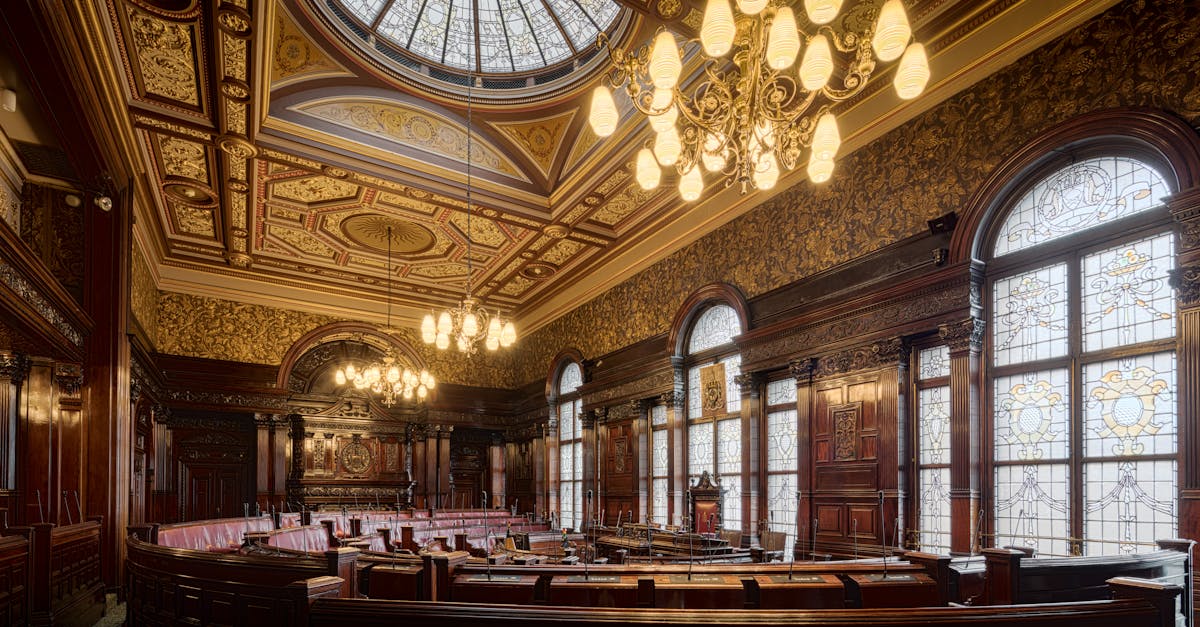
In 2022, about 2,200,000 people were imprisoned in the United States, illustrating the scale of the US court system, which is a dual structure of federal and state courts.
The system is built on jurisdiction, not just hierarchy, and answers the question of which court handles a particular dispute.
Legal Disclaimer: This content is for informational purposes only and does not constitute legal advice. Consult a qualified attorney for legal matters.
What Is the US Court System? The 3-Tier Map You Actually Need
The modern court system in the US consists of two parallel tracks: a single federal branch and fifty distinct state branches. Most legal friction arises when parties unknowingly cross the invisible line between them. Federal courts draw power solely from Article III of the Constitution, granting them subject-matter jurisdiction over federal statutes, treaties, cases involving the United States, and diversity disputes exceeding $75,000. State courts, by contrast, possess general jurisdiction, allowing them to hear any case not expressly reserved for federal courts. This flexibility makes them the workhorses of American justice, handling over 95% of all filed cases, from traffic tickets to divorces and most criminal prosecutions.
Because state courts hear the majority of matters, their procedural rules dominate everyday legal practice. Yet the federal system provides a uniform forum for issues that cross state lines or implicate national policy. Understanding the three-tier map - district courts, courts of appeal, and the Supreme Court - clarifies where a case starts, where it can be appealed, and the odds of reaching the nation's highest bench.
Key Takeaways
- Federal courts derive authority from Article III.
- State courts handle more than 95% of cases.
- Three-tier federal ladder limits appellate access.
- Jurisdiction, not hierarchy, decides the proper court.
- Tribal courts add a third sovereign layer.
Statistically, the federal system processes roughly 300,000 civil filings each year, while state courts manage millions. This disparity shows why most citizens encounter state tribunals first. For a visual representation, consider the map of jurisdictional boundaries as a layered cake: the broadest layer is state courts, the middle layer is federal courts, and a thin but potent slice represents tribal courts.
The Hidden Architecture of the Federal Courts Revealed
Climbing the three-tiered federal court ladder - District, Circuit, Supreme - is not a right but a series of increasingly narrow gates. Less than 1% of petitions receive certiorari review by the Supreme Court each term, making intermediate appellate courts the critical finality points for most litigants. Each of the 94 federal district courts serves as the sole trial-level fact-finder for federal law. They create a permanent record that appellate courts must review, typically under a highly deferential "clear error" standard that respects the trial judge's factual findings.
The 13 U.S. Courts of Appeals, including the specialized Federal Circuit, do not retrial cases. Instead, they examine the application of law by district courts, creating binding precedent only within their geographic circuit. When different circuits reach opposite conclusions on similar legal questions, a "circuit split" emerges, often prompting the Supreme Court to intervene to resolve inconsistency.
Procedural nuances also shape outcomes. For example, district courts follow the Federal Rules of Civil Procedure, which set deadlines for pleadings, discovery, and motions. Missing a filing deadline can result in dismissal, regardless of substantive merit. The appellate process adds another layer of rules, such as the requirement to file a petition for a writ of certiorari within 90 days of a lower-court decision. Understanding these procedural gates helps litigants anticipate where a case may stall.
Less than 1% of petitions are granted certiorari by the Supreme Court each term, highlighting the pivotal role of circuit courts.
According to Barfoot, Hatcher outsmart federal courts note that strategic filings in district courts often dictate the trajectory of complex commercial disputes, reinforcing the importance of mastering the first tier.
Why Your Definition of Court System Misses Tribal Justice
The United States' definition of its court system often omits a crucial third sovereign: over 574 federally recognized tribal nations that operate their own independent judicial systems. These courts possess inherent authority that predates the Constitution, handling civil matters involving tribal members on tribal lands and, in many cases, criminal matters as well.
Tribal courts gained limited criminal jurisdiction after the 1978 Supreme Court decision in Oliphant v. Suquamish, which stripped them of authority over non-Indians. The 2013 Violence Against Women Act Reauthorization partially restored this power, allowing tribal courts to prosecute certain domestic violence offenses involving non-Indian perpetrators. Nonetheless, jurisdictional complexity remains: a single case may involve tribal, federal, and state courts, each asserting authority based on the parties, location, and nature of the dispute.
The federal government labels tribal nations as "domestic dependent nations," placing them under a trust responsibility while often forcing them to navigate overlapping jurisdictional claims. For example, child welfare cases may be heard in tribal family courts, but the state may retain the right to intervene under the Indian Child Welfare Act. Environmental regulation disputes frequently involve tribal courts asserting sovereignty over natural resources, only to be challenged by federal agencies.
Data from the National Indian Justice Center indicates that tribal courts resolve roughly 30,000 civil matters annually, a modest figure compared with state courts but significant for the communities they serve. Recognizing this third layer reshapes the map of American justice, reminding practitioners that jurisdiction extends beyond the familiar federal-state binary.
How the Judicial Branch Wields Power You Never See
The judiciary's most consequential power - judicial review - was never explicitly granted by the Constitution but was seized by the Supreme Court in the 1803 case Marbury v. Madison. This silent check allows unelected judges to invalidate acts of Congress and the Executive, shaping policy from behind the bench.
Beyond headline-making rulings, the judicial branch exerts enormous soft power through procedural rulemaking. Committees of judges craft the Federal Rules of Civil Procedure, the Federal Rules of Evidence, and local court rules that dictate filing deadlines, pleading standards, and discovery limits. These rules determine the pace, cost, and even the feasibility of seeking justice for millions of litigants.
Federal judges, appointed for life tenure, manage overwhelming dockets through "managerial judging." Pre-trial conferences, settlement conferences, and case management orders press parties toward resolution. Studies show that over 97% of civil cases settle before trial, meaning judges often decide outcomes without a jury. This managerial role subtly shifts judges from neutral arbitrators to administrators of the justice system, influencing case trajectories through procedural levers.
According to James Madison and the Judicial Power discuss how early legislators underestimated the long-term impact of judicial rulemaking on the balance of powers.
7 Million Under Supervision: The Staggering Reach You Ignore
When the court system in the US is measured by human impact, a staggering 7,000,000 adults are under correctional supervision via probation or parole - more than double the incarcerated population. This supervision empire is administered primarily by thousands of local state and municipal courts that conduct compliance hearings, modify release conditions, and issue warrants for technical violations.
These lower-court driven processes often lack the full constitutional safeguards afforded to formal criminal trials. A typical probation violation hearing may last five minutes, with the judge deciding on revocation based on a brief written report. Yet the consequences - re-incarceration, loss of employment, family disruption - are profound. The sheer scale means that the average citizen’s contact with the judicial branch is more likely a brief plea bargain in a crowded state courtroom than a dramatic federal trial.
Mass misdemeanor processing further expands the system's reach. Traffic tickets, minor theft, and low-level drug offenses funnel through municipal courts, generating millions of docket entries annually. This volume creates a perception that the courts are swift and punitive, while the underlying procedural complexities remain hidden from public view.
Data from the Department of Justice confirms that supervision accounts for roughly 3.2 percent of the adult population, illustrating how the court system extends its influence far beyond prisons. Understanding this hidden layer helps citizens anticipate the realities of post-conviction oversight and the role of local courts in everyday life.
Your First Legal Step: The Surprising Filing Fix
Before researching a single case law, novice researchers must first locate the mandatory "court rules" page for their specific jurisdiction. Procedural missteps - such as using the wrong font size, exceeding page limits, or filing electronically when a paper copy is required - cause immediate dismissals more often than substantive legal errors.
The decisive jurisdictional question is not "what law was broken?" but "who can sue whom, where, and for what remedy?" This three-part analysis of standing, personal jurisdiction, and subject-matter jurisdiction filters out more cases than any judge’s ruling ever will. For example, a landlord-tenant dispute in a rural county will almost always be heard in the county’s circuit court, not a federal district court, because the matter lacks federal question jurisdiction.
For over 80% of common legal issues - landlord disputes, minor contracts, family matters - the correct starting point is the county clerk of courts website. These sites host local rules, filing instructions, and docket calendars. By beginning with the proper clerk’s portal, practitioners avoid costly re-filings and ensure that their complaint meets the precise technical requirements of the court.
A practical checklist includes:
- Identify the appropriate court level (municipal, county, state, or federal).
- Locate the court’s local rules on the clerk’s website.
- Verify filing format, page limits, and service deadlines.
- Confirm whether electronic filing (e-file) is mandatory.
- Prepare a short cover letter referencing the rule citation.
Following these steps transforms a daunting legal landscape into a manageable process, allowing the researcher to focus on substantive arguments rather than procedural roadblocks.
Frequently Asked Questions
Q: What are the three tiers of the federal court system?
A: The federal system consists of district courts (trial level), courts of appeals (intermediate appellate level), and the Supreme Court (final appellate level). Each tier reviews cases based on distinct jurisdictional rules.
Q: How do tribal courts fit into the US court system?
A: Tribal courts operate as a sovereign layer alongside federal and state courts. They have authority over civil matters involving tribal members on tribal lands and, in many cases, criminal matters, though jurisdiction over non-Indians is limited.
Q: Why do most people never see a Supreme Court case?
A: The Supreme Court grants certiorari to less than 1% of petitions each term, focusing on cases that resolve circuit splits or address significant federal questions, leaving the majority of appeals to be settled by the courts of appeals.
Q: What is the role of procedural rulemaking in the judiciary?
A: Judges draft procedural rules that set filing deadlines, evidence standards, and pleading requirements. These rules shape the cost, speed, and viability of lawsuits, effectively guiding the flow of cases through the system.
Q: How many people are supervised by the court system in the US?
A: Approximately 7,000,000 adults are under correctional supervision through probation or parole, a number that far exceeds the incarcerated population and highlights the extensive reach of lower-court oversight.


